Enhance Your Skin’s Natural Beauty with
AstaReal® Natural Astaxanthin
Beauty from inside & out
The skin’s appearance and resilience depend not only on its surface, but also on deeper layers — the epidermis, basal layer, dermis, and the supporting extracellular matrix made up of collagen, elastin, and glycosamino-glycans. Over time, and under the influence of UV exposure, inflammation, and oxidative stress, these structural components decline. As a result, the skin barrier weakens, water loss increases, and elasticity decreases. A combined regimen of oral supplementation and topical application of natural antioxidants such as astaxanthin may provide synergistic, long-lasting benefits for overall skin health.
Oral administration allows astaxanthin to reach the cells and skin structures, delivered via the microcirculation to all skin layers rather than just the surface. Prophylactic supple-mentation with AstaReal® astaxanthin may inhibit accelerated skin ageing, thanks to its antioxidative and anti-inflammatory effects.(1–3) Prolonged oxidative stress in the skin leads to chronic inflammation and skin deterioration.
A randomised, double-blind, placebo-controlled study indicated that AstaReal® astaxanthin may contribute to maintaining skin health throughout seasonal changes, when environmental factors such as UV light and dryness place our skin under stress.(2)
The benefits of astaxanthin have been proven not only for women, but also for men. In a randomised, double-blind, placebo-controlled study in men, crow’s feet wrinkles, elasticity and transepidermal water loss improved after supplementation with 6 mg AstaReal® astaxanthin daily for 6 weeks.(4) The underlying mechanisms may involve scavenging of free radicals and inhibition of enzymes degrading collagen and elastin in the skin.(5)
Furthermore, astaxanthin may improve the water retention in the outer epidermal layer by protecting the cornification process.(4)
Applying topical products enriched with astaxanthin- - such as serum, cream, or mist directly to the skin gives local effect. It may enhance the effect of oral supplementation to seal the barrier, reduce transepidermal water loss (TEWL), protect the stratum corneum and outer epidermis, improve texture, smooth-ness and visible surface signs such as fine lines, dryness.
In an open-label study combining 6 mg AstaReal® astaxanthin/day oral + 2 mL/day topical (78.9 µM solution) for 8 weeks in women, improvements were seen in wrinkle depth (crow’s-feet), age spot size, elasticity, skin texture and moisture of corneocyte layer.(4)
Astaxanthin’s antioxidant capacity exerts a protective effect on different types of cells in the skin, e.g. fibroblasts and keratinocytes. In vitro studies have shown that astaxanthin can restore the endogenous antioxidant balance in fibroblasts and to reduce the level of pro-inflammatory cytokines produced by keratinocytes.(6,7) Animal studies indicate astaxanthin accumulates in the skin and protects against UV-induced damage such as photoageing.(8) However, there is yet no strong human clinical data about UV-protection effect of astaxanthin, and thus no such health claims are allowed within the European Union. Astaxanthin does not replace sun-screen or broad UV-protective measures; it can be considered as a complement to daily UV-protection routine, not a substitute.
• Improves skin elasticity by strengthening the collagen in dermis
• Reduces wrinkle size and improves skin microtexture
• Prevents roughness by improving moisture retention in the outermost layer, the stratum corneum
• Revitalises photoaged skin by quenching free radicals in all dermal layers
More than ever, consumers are interested in beauty that starts from within. Strong interest from younger people keen to preserve their natural youth is a major driver behind the category’s growth. Similarly, the ever-expanding ageing population wants to retain a youthful appearance into later life, thus contributing to the demand for high quality beauty ingredients. Clearly, this creates an opportunity for natural ingredients such as astaxanthin.
By combining “inside-out” ingestion of astaxanthin with “outside-in” topical application, skin health enthusiasts can harness both deep structural support and visible surface enhancement. The available and ever growing human clinical evidence supports improvements in skin moisture, elasticity and visible signs of ageing when astaxanthin is used in such a dual-mode strategy.
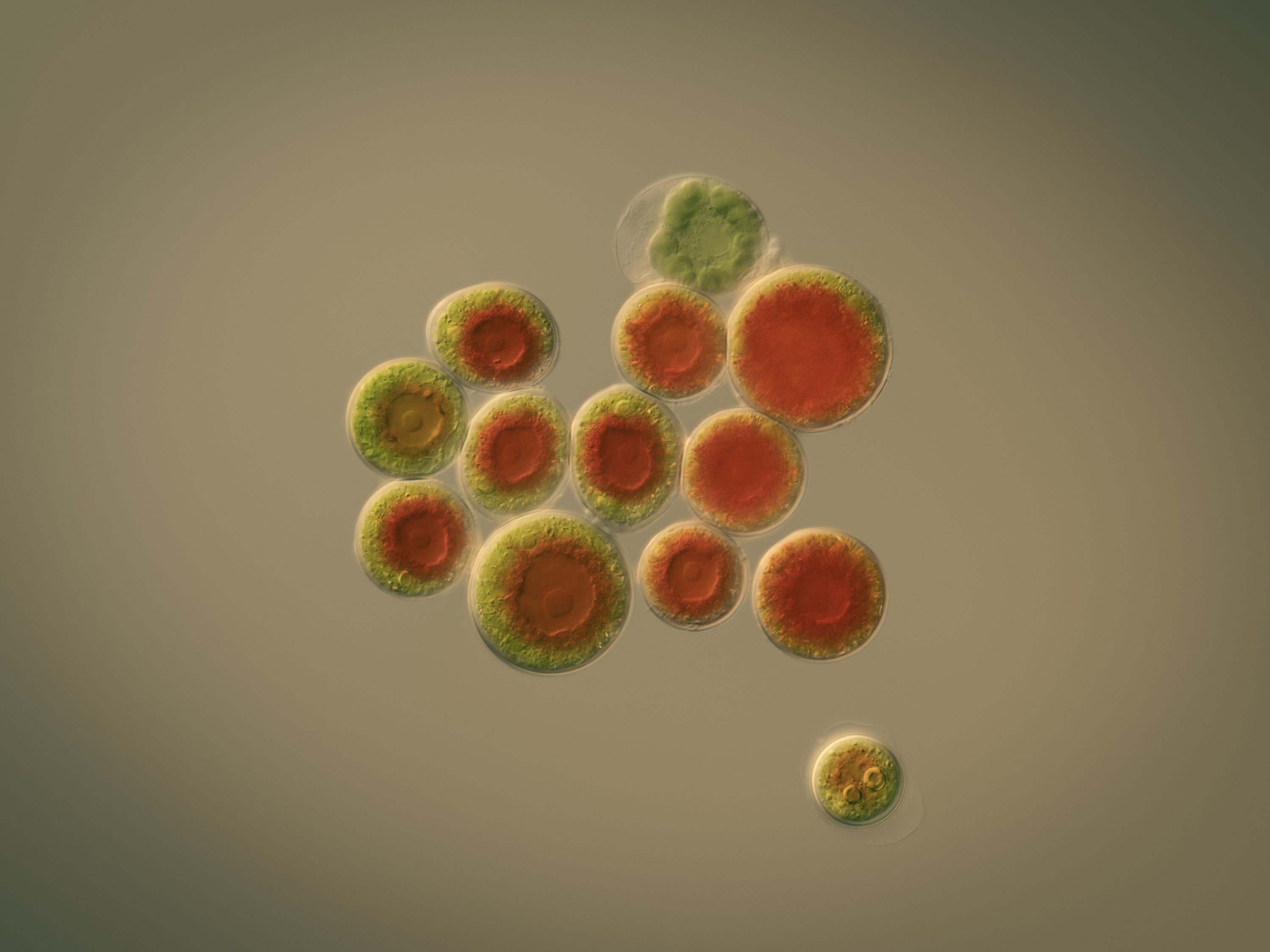
It is a naturally occurring carotenoid which is derived from the microalgae Haematococcus pluvialis. As well as being one of the most powerful antioxidants known to science, it also has potent anti-inflammatory properties. One distinct advantage of astaxanthin in compar-ison to other antioxidants, is its ability to span the entire lipid bilayer of the cell membrane, thus providing superior protection from the inside out.
This is a vital aspect of natural astaxanthin’s healthy-aging power as protection is provided to the different layers of the skin; from the visible surface to the delicate deep layers where new skin is formed. In contrast to many natural antioxidants, astaxanthin exerts anti-oxidant benefits without having harmful prooxidant side effects.